How I Can Help
Whether you're looking for support for yourself or someone you care about, music therapy can help. I provide music therapy in a wide range of settings, including schools, hospitals, care homes, community settings and individuals' homes. No previous musical experience is needed. I work with people of all ages, providing music therapy that is tailored to each individual's needs, strengths and goals.
Babies & Pre-school Children
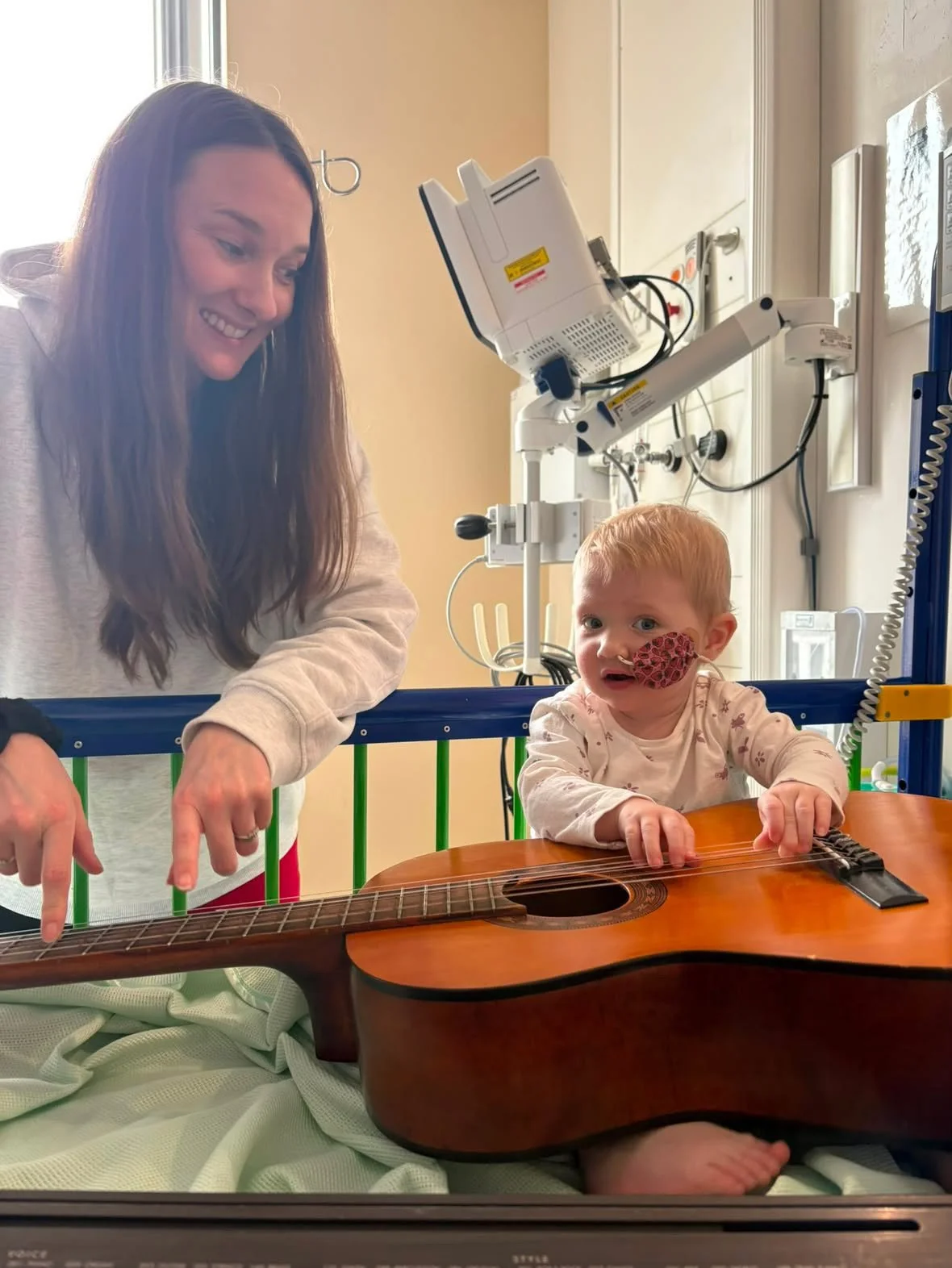
Music therapy can provide a playful and engaging way for babies and young children to connect, communicate and develop. Sessions are shaped around the individual child and can support areas such as communication, interaction, attention, movement and emotional expression.
I work with children with a wide range of needs, including autism, developmental and learning disabilities, physical disabilities and complex medical needs.
School-aged Children & Young People
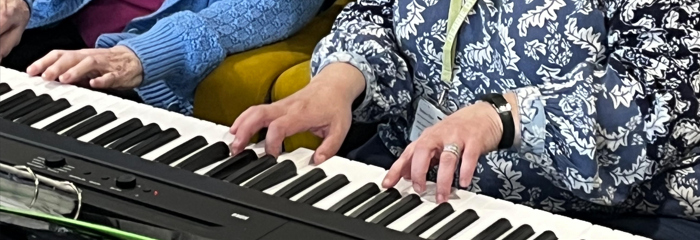
Music therapy can offer children and young people a different way to communicate, express themselves and build relationships.
Through shared music-making, sessions can support communication and interaction, attention and engagement, emotional expression, confidence and physical development. I work with children and young people with a wide range of needs, including autism, learning disabilities, PMLD, physical disabilities and complex medical needs.
Schools
Music therapy can support pupils' emotional, social, cognitive, communication and physical development.
I work with specialist schools, providing individual and group music therapy programmes tailored to the needs of each pupil and the school. Assessment, goal setting and regular reviews help to ensure that the work remains purposeful and responsive to each pupil's development.
I work collaboratively with teaching staff and other professionals and can support outcomes identified within a pupil's EHCP.
Adults
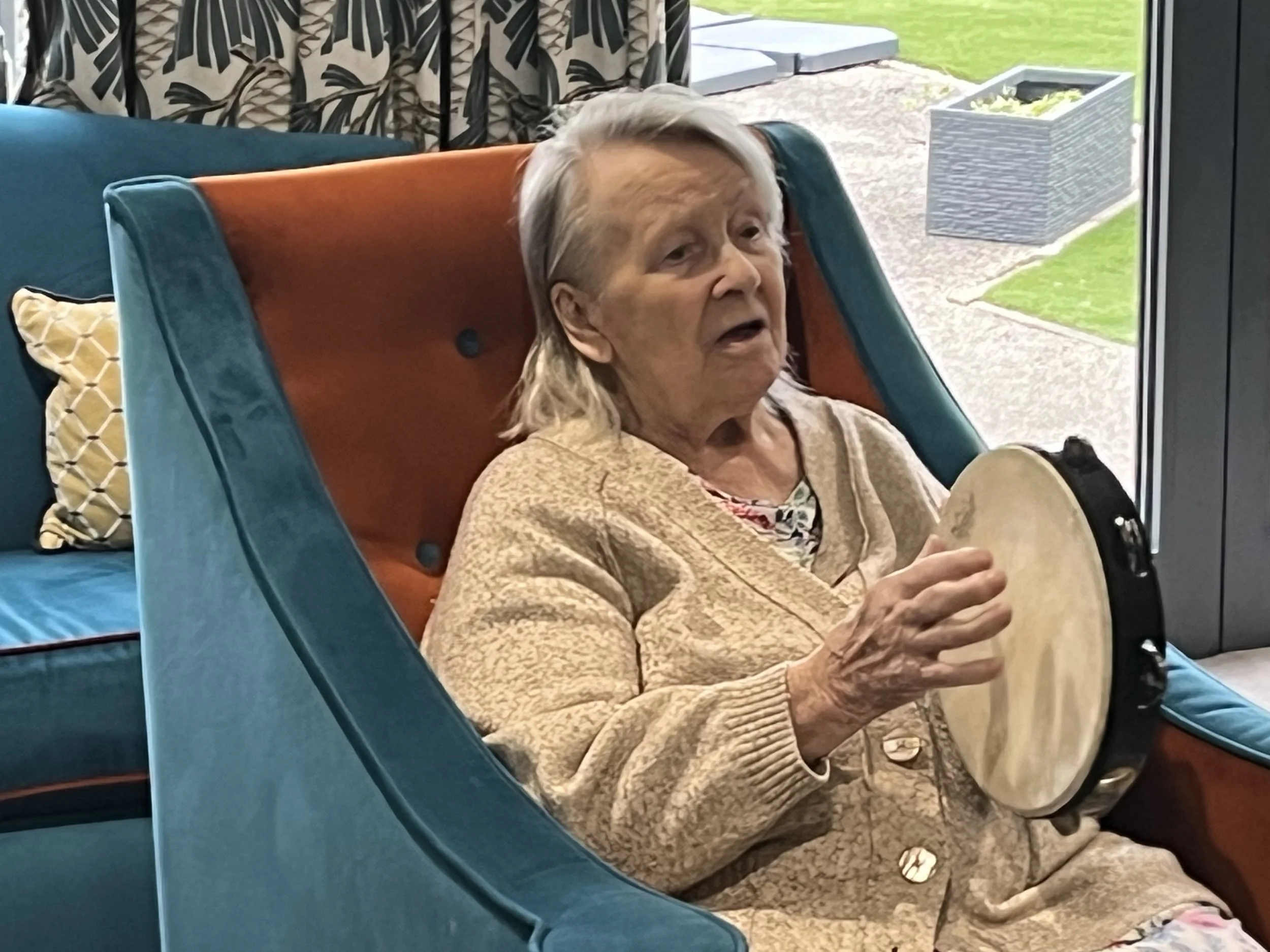
Music therapy can support adults with a wide range of needs, providing opportunities for connection, communication, self-expression and emotional wellbeing. Sessions are individually tailored and can draw on a person's strengths, interests and musical preferences.
I also work with adults with neurological conditions, including stroke, acquired or traumatic brain injury, Parkinson's disease and other conditions affecting movement, communication or cognition.
Older Adults
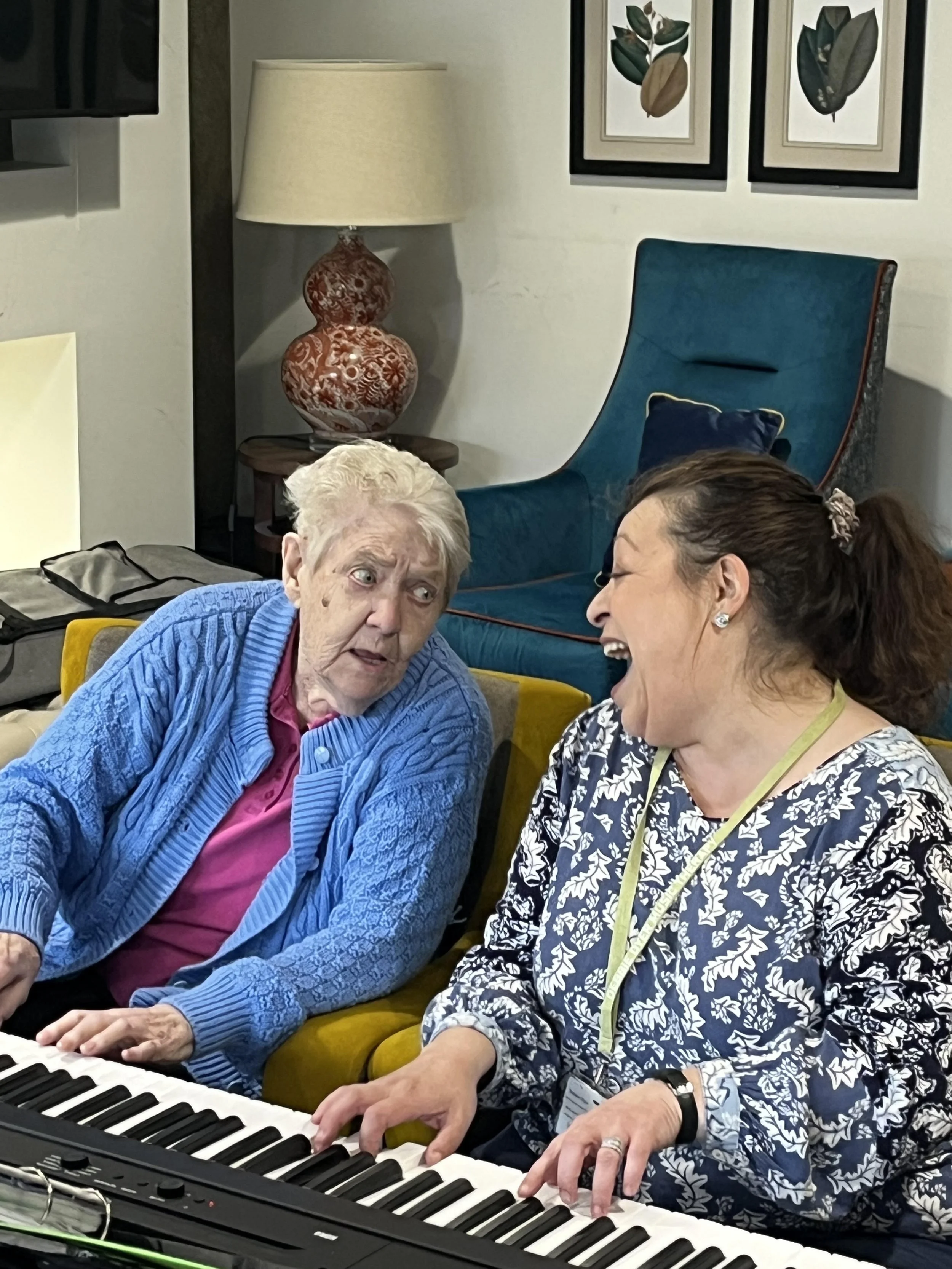
Music therapy can support connection, communication, autonomy, self-expression and emotional wellbeing in later life. It can be particularly valuable for people living with dementia, helping to maintain a sense of identity, encourage interaction and support quality of life.
Sessions can be individual or group-based, providing opportunities for shared music-making and musical companionship, helping to reduce social isolation and build meaningful connections.
Care Homes
I provide individual and group music therapy within care homes, working with residents with a wide range of needs, including those living with dementia and neurological conditions. Individual sessions can take place in a resident's room where needed.
Sessions can support connection, communication, self-expression and emotional wellbeing, while providing opportunities for meaningful engagement and shared music-making.
I also provide large group sessions, bringing residents, staff and family members together through music. These shared experiences can offer an opportunity to see residents in a different context, as they connect, participate and share music with those around them.
I work closely with care staff and families to ensure that music therapy is responsive to each resident's individual needs and contributes positively to their quality of life.
Individual Music Therapy Sessions
These sessions are centred entirely around the person - who they are, what they need and what matters to them.
The work is person-centred, flexible and responsive, providing space for self-expression, connection and being heard through music.
Sessions can take place in a range of settings, including schools and care homes. For people whose health makes it difficult to attend elsewhere, music therapy can also be provided in their own home.
Neurologic Music Therapy® (NMT®)
“The Neurologic Music Therapy® (NMT®) System of Techniques is a standardized evidence-based clinical treatment system of 20 techniques that is driven by advances in applied auditory music neuroscience and the clinical understanding of music perception, production, and cognition.”
In practice, NMT® uses music in a structured and purposeful way to work towards specific non-musical goals in three main areas: movement, speech and language, and cognition.
Following assessment, the appropriate NMT® techniques are selected according to the client's needs and goals. As a Neurologic Music Therapist® as well as a Creative Music Therapist, I have the flexibility to use either Creative Music Therapy or NMT® techniques, choosing the approach that will be of greatest benefit to each client.