What is Music Therapy?
Music therapy is an evidence-based healthcare profession in which music is used purposefully within a therapeutic relationship to support communication, emotional wellbeing, cognitive functioning, physical rehabilitation, social connection and quality of life.
It is delivered by HCPC-registered music therapists, who have completed specialist postgraduate training and work within a professional framework of clinical practice, ethics and continuing professional development.
Unlike music lessons or performing, the primary focus of music therapy is not learning musical skills. Instead, music is used as a therapeutic tool to support children, young people, adults and older adults with a wide range of needs.
Who can benefit?
Music therapy can support children, young people, adults and older adults across a wide range of health, education and community settings. It can be beneficial for people with autism, learning disabilities, communication needs and complex needs, as well as those living with neurological conditions such as stroke, brain injury or Parkinson's disease.
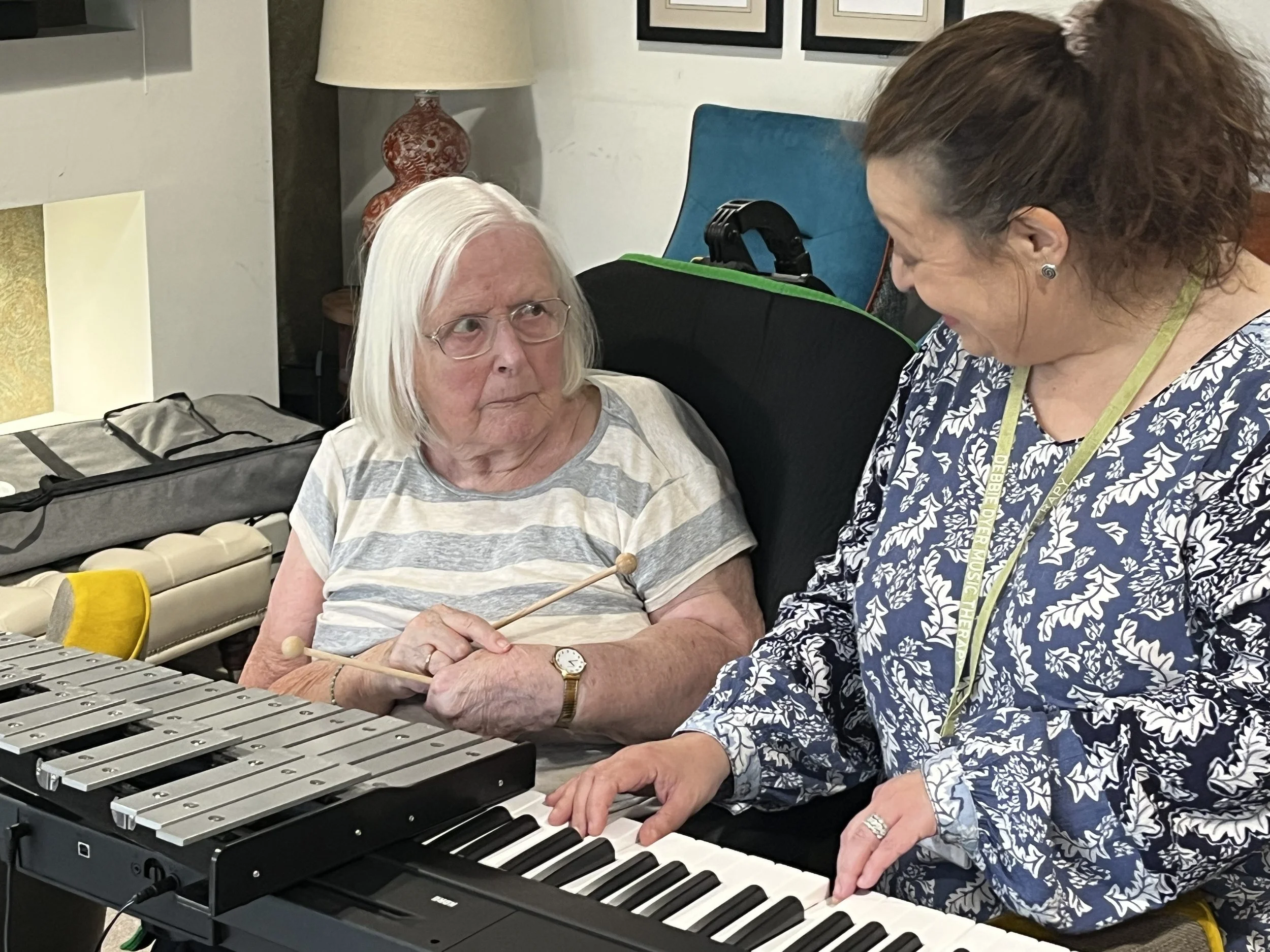
Music therapy can also be valuable for older adults, including people living with dementia, and for those experiencing loss, grief, social isolation or reduced wellbeing. You don't need to have a particular diagnosis to benefit from music therapy. At its heart, it can provide opportunities for connection, communication, self-expression and improved quality of life.
What happens in a music therapy session?
Every music therapy session starts with the individual. Sessions are shaped around each person - how they respond, how they communicate, what matters to them and what they might need support with. No two people are the same, so no two music therapy sessions are exactly the same either. Sessions can involve playing instruments, singing, improvising, listening to music, song writing or movement. Music can also be used in more targeted ways to support areas such as communication, movement or cognition. You don't need any previous musical experience. Sessions are adapted so that everybody can take part in a way that is meaningful to them.